 British Manufacturer | Est. 1890
  ISO Registered Company


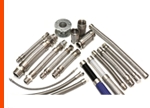


When selecting flexible tubing for industrial applications, durability, flexibility, and performance are essential. Stainless Steel Rubber Packed Interlock tubing is specifically engineered to deliver strength and reliability in demanding environments, making it an ideal solution for a wide range of industrial uses.
Built for Harsh Industrial Environments
Manufactured from high-quality stainless steel, this interlocking tubing provides excellent mechanical strength and long service life. Stainless steel offers strong resistance to corrosion, heat, and mechanical wear, making it suitable for use in challenging environments such as exhaust systems, industrial ducting, and heavy-duty machinery.
The addition of rubber packing within the interlocked profile enhances the sealing properties of the tube. This reduces leakage, improves containment, and increases overall efficiency in applications where air or material control is important.
Flexible Yet Strong
One of the key benefits of interlock tubing is its construction. Formed from a spirally wound metal strip with an interlocking profile, it delivers excellent flexibility without compromising structural integrity. This makes it ideal for installations where vibration, movement, or thermal expansion are present.
Compared to rigid pipework, stainless steel rubber packed interlock tubing absorbs vibration and allows for movement, helping to reduce stress on connected components. This makes it particularly suitable for exhaust systems, vibration-prone machinery, and dynamic industrial environments.
Versatile Across Multiple Applications
Stainless steel rubber packed interlock tubing is widely used across numerous industries due to its adaptability. Common applications include:
- Exhaust extraction systems
- Protective outer casing for cables or hoses
- Low-pressure ventilation systems
- Material handling and bulk transfer of dry products
- Mechanical protection in high-temperature environments
Its flexibility and strength allow it to be used in both new installations and retrofit projects, especially where space is limited or routing is complex.
Easy to Install and Customise
Another advantage of stainless steel rubber packed interlock tubing is its ease of installation. The flexible design allows it to be routed around obstacles and through tight spaces, reducing installation time compared to rigid pipe systems.
It can also be supplied in various diameters and lengths to meet specific project requirements. This level of adaptability ensures optimal performance while keeping installation straightforward and efficient.
A Reliable Industrial Solution
Choosing stainless steel rubber packed interlock tubing means investing in a product that combines:
- High corrosion resistance
- Strong mechanical durability
- Vibration absorption
- Improved sealing performance
- Flexible installation options
For industrial environments that demand reliability, longevity, and performance, stainless steel rubber packed interlock tubing provides a dependable and cost-effective solution.


